Sunday, April 10, 2016

Sunday, March 20, 2016
Half Dreaming on the American Dream
The american dream is that, if you work hard, you can make it. You can go to a good college, get a good job, marry someone, get an upper-middle class house, and have your kids go to a nice school.
My definition of wealth is money and assets and income. Officially wealth is assets, which includes money, minus debts, but I feel like income is important in the idea because income adds the idea of continual growth; the idea that you will continue to be wealthy, and you feel safe and content. I feel like debts is important, but only when you’re worried you won’t be able to pay it back. Like, if you have a mansion and 3 Maybachs, but it’s all on debt and you know you can’t keep it, and you know that you’re screwed because you’ll have to pay interest too, it’s not wealth because the objects aren’t yours and you are totally screwed. However, if you have a house and you’re ¾ in debt on it, but you know you’re going to finish the mortgage in due time (i’m 60% sure that’s the wrong terminology), then I think it might feel like you already own the house, and it counts as wealth. I think over all, wealth is plenty and security. It’s the idea that you can get whatever you really want, and the knowledge that this state of affairs will continue indefinitely.
WARNING: LIBERAL BIAS AHEAD, and seriously, it's pretty bad
We have the liberal viewpoint that many people are made poor because they were born poor and weren’t given the opportunities that rich people were, and that most wealthy people are still wealthy because they were able to utilize their privilege. We can see this perspective when Nick’s father says that “Whenever you feel like criticizing any one… just remember that all the people in this world haven’t had the advantages that you’ve had” (Fitzgerald 1)
The conservative viewpoint is that people who are wealthy earned their money and poor people are poor because they are either stupid or didn’t work hard. In the Great Gatsby, I lean towards the stupid and lazy. More stupid because Mr. Wilson is described as not being too bright (Fitzgerald 26). Well, Prager U says that it’s not that they’re poor or don’t work hard, but that the welfare state is encouraging people not to work or live in poverty.
Compared to East Egg’s scorn for new money, the US now is a lot more about self made people. Well, I don’t think it’s about coming from poverty into wealth. Like with that Republican Senator’s response to the state of the union. She “was raised to live simply” but she worked and worked to become Senator. She also gives some ideas about the American dream be talking about how it’s failed. Ernst said “Many families feel like they’re working harder and harder, with less and less to show for it.” This is the opposite of the American Dream; to work and not get anything. The American Dream is to work and get results, the results being cash, cash, money.
Yeah, I subscribe mostly to the liberal viewpoint, that most poor people aren’t given the opportunity to become wealthy and rich people are able to use their wealth to gain further wealth. Most of this comes from my parents and the fact that I am really well off. My parents have enough money that they were able to pay for someone to help me look at colleges and get scholarships, and because of that, I applied to schools that gave a lot of merit aid and now every time I talk with Ms. Hicks I get to tell her about money colleges are throwing at me. A lot of this was work, yes, but a lot of it was also privileged. The assumption that I would go to college also does wonders. Like, I’m going to college, there was no question, and because of that, I’m going to college (as long as they don’t kick me out because of the grades I’m getting this quarter, Mrs. G plz save me) and getting an education, which will help me later. There’s also the issue about how, because of rich kids expecting scholarships for academic performance, colleges have to compete with each other and bribe these privileged kids to go to their school, instead of using the money for need-blind admissions, to make sure that all qualified students are accepted and they can all pay for it. Seriously, if my Dad wanted to save $160,000 so that I could go to a need blind institution where we would pay around $40,000 a year, he probably could have. But he didn’t want to, so I played the school scholarship game and am applying and visiting schools like Whitman College, 1% African American, worst of elite colleges for Income Diversity because they use their money to get people like me to their college. Privilege and wealth is bullcrap. Anyway, that that rant is over, Vote Bernie Sanders for president.
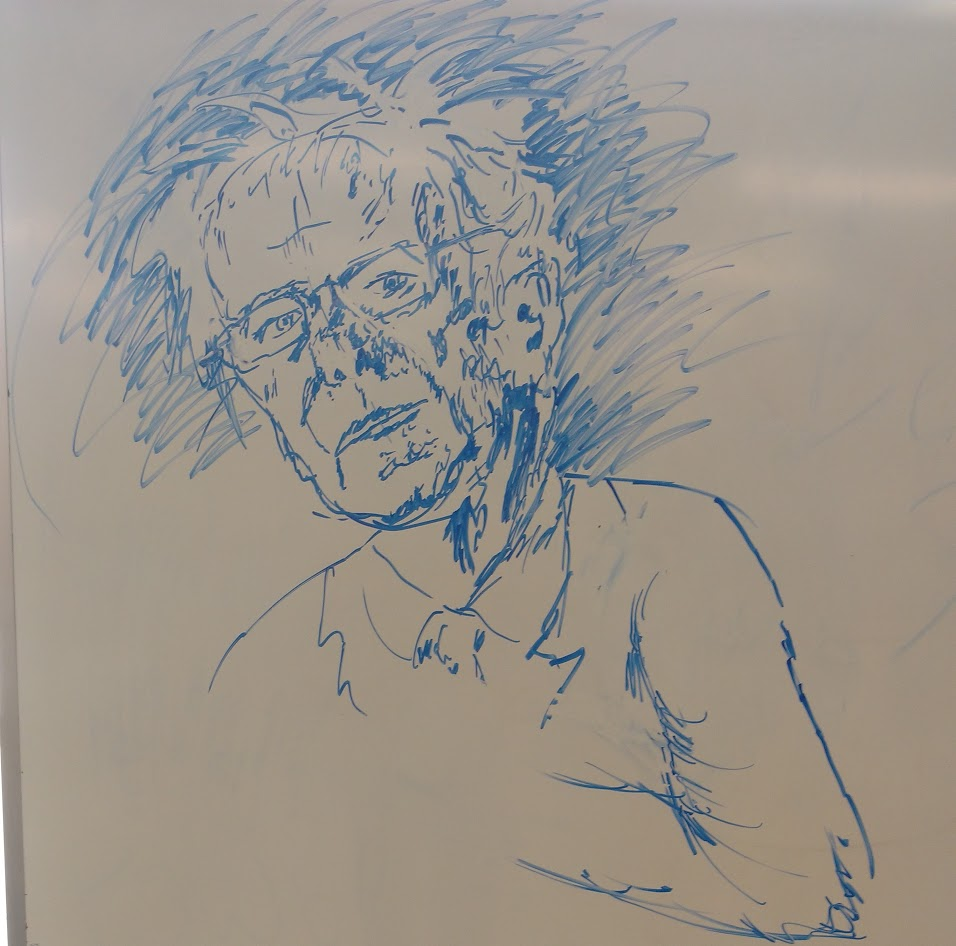
JK. I didn’t talk about poverty at all. Much of my attitude toward poverty comes from the vlogbrothers, and especially John Green’s particular attempt to decrease world suck. And it’s very nice to see the progress the world has made.
Sunday, March 6, 2016
Can't find in decoding
As Gregor Samsa awoke one morning from uneasy dreams he found himself transformed in his bed into a gigantic insect.
- “found” - rather underwhelming for a gigantic insect
- “transformed” - is a bit magical, and I imagine the process taking somewhere between 5 seconds and 5 minutes
- “Gigantic insect” - Insect is pretty technical word. Gigantic is a fun word, It could be a word Dr. Seuss made
- Syntax: “one morning” is placed between “awoke… from” - I feel this is a bit awkward. The same is true for “in his bed” between “transformed...into”
- Imagery/details: The “gigantic insect in a bed” is little funny and ridiculous
- Structure: “As [he did this], he found [this]” - This implies the actions are simultaneous, somewhat causal
- Other: Uneasy dreams foreshadows the transformation
Gregor Samsa woke from uneasy dreams one morning to find himself changed into a giant bug.
- diction: “woke” - abrupt
- “changed” - basic word, which provides less expectation for something weird, has a “it just kind of happened attitude”
- “giant bug” - simple words, like more of a kid’s story
- Syntax: “one morning” is placed after “from uneasy dreams”
- Drops “in bed” - which I totally agree with, “in bed” is awkward to fit in
- Imagery/details: Bug is more ambiguous, be I envision more of a giant cockroach or beetle, instead of some three pieced insect
- Structure: With the drop of “in bed” makes the structure more streamlined, and one morning doesn’t interrupt “woke from...”
When Gregor Samsa awoke from troubled dreams one morning he found he had been transformed in his bed into an enormous bug.
- Diction: “troubled” - “double, double, toil and trouble” got that magic going on. Troubled to me means less of lightly tossing and turning and awkward grunts, like with uneasy, but more of a waking up and then considering the dream “low key problematic”. I think troubled dreams makes it sound like it was built on subconscious issues that were already there. While uneasy dreams cause discomfort to most.
- “transformed” again
- “enormous” - I would put it somewhere between
- Structure: “When this happened, that happened”
- Syntax: “he found he had been” implies that there was someone that did this to him.
- Imagery/details: Honestly, for me, there’s not much special about the imagery here.
One morning, upon awakening from agitated dreams, Gregor Samsa found himself, in his bed, transformed into a monstrous vermin.
- Diction: “Agitated” - negative, pretty active word, like he is physically moving in his bed
- “Monstrous vermin” - very negative connotations.
- Monstrous’ root is the noun “Monster”
- Syntax: “One morning,” at beginning. more narrative like “once upon a time”
- Gregor Samsa is placed much later in the sentence
- Structure: Many commas, a long and complicated sentence, but at the same time, a bit more sensical without run ons like Gregor Samsa awoke One Morning from uneasy dreams. One Morning was very thankful.
- Imagery - “Monstrous vermin”, something grotesque
- Other: The severity of “agitated dreams” matches the intense imagery of the insect
- Alliteration: “awakening from agitated”
Original: Als Gregor Samsa eines Morgens aus unruhigen Träumen erwachte, fand er sich in seinem Bett zu einem ungeheuren Ungeziefer verwandelt.
After analyzing each, respond to the following questions in a well-developed (2-3 paragraphs) response- think about the translations as a whole: How does the word choice, syntax, punctuation, and imagery shift in each affect meaning? Is one more effective than another? Why? What does this exercise bring up about the difficulty of reading translated texts? How do different translations effect the tone of the sentence?
The second translation is very simple and streamlined. It drops “in his bed” which was awkwardly squished into the other translations. On the other hand, it also drops the absurd imagery of a giant bug in a human bed, which is hilarious.
Both the first and third translations contrast the both the fact of a large bug in a human bed, but also the description of the bug. “Gigantic insect” mixes a goofy word with a fairly formal term. “Enormous” and “bug” are both fairly informal, but they differ in syllable count. These contrasts highlight the absurdity of the predicament.
I think syntax plays a large role in affecting meaning. In Translation 4, there is strong negative diction, but the only reason these terms were able to take is because Gregor Samsa’s name was placed later on in the sentence in order to distance Gregor. Otherwise, we’d just feel really bad for Gregor because he had to be so ugly, instead of fearing and disliking Gregor. Syntax is able to take you with or push you away from characters, and how someone feel about a character, especially the main character, is very important in a novel.
The fourth translation has far and away the most distant meaning from the rest. It is harsh, with negatively connotated diction like monstrous and vermin. It also puts Gregory Samsa away from the beginning of the sentence, and in that, distances him from the reader. In regards to punctuation, the heavy use of commas and interjecting phrases, the fourth translation builds suspense before getting to the “monstrous vermin.” In this, it gives the start of the story a horror vibe, like it could be told around campfires. This horror theme doesn’t work well with translations one and three. The use of structure with “As Gregor Samsa woke”’ and “When Gregor Samsa awoke” takes the reader with Gregor, so we identify more with him. The tone in translation 2, as a short and to-the-point version, is more informative.
This exercise shows how different translations of the same text can be.
Translation 2, in particular, shows how information can be simply dropped. He could be at his bathroom at a mirror, we don’t know now. This show that by reading a translation, we might not just get a different interpretation of information, but simply miss some of it.
Translation 4 shows how drastically the tone can vary from translation to translation. Like, if this person translated diplomatic or military messages, I would be very scared because they could traslate “several shots” into “a multitude of bullets” and freak people out with a harsher tone.
Sunday, February 21, 2016
More like Individual Oral Crap
Audio recording software >> http://vocaroo.com/i/s11GvPYnEi9i
Knowledge and Understanding: 5
Adequate, I hope. I supported comments with references for the text. I mean, mostly I made references to the text and then tried to make comments, but anyhow. I also didn't really connect the
Understanding the use and effects of literary features: 4
I didn't really name specific literary features, except for the structure from quotes to internal thoughts. The rest was words.
Organization: 2
There were long pauses, breaking of commentary for internal reflection (which I wouldn't do for the actual IOC) and I kind of just cut one train of thought off, but, I mean, it has some organization, right?
Language: 2
I mean, I spoke english. It was generally coherent. Not particularly well phrased or anything. (first rated at 3, then brought down.)

Sunday, February 7, 2016
Pull up the Covers


1, 2, 3, 4.

Every cover except 4 has both a quote and a bragging point, as well as "a novel" in cover 1 (really, are you sure?). Cover 4 is rather stark. I suspect it was made later after the book was already fairly recognized. That cover in particular shows the most about what the book is actually about. 2 and 3 put more of an emphasis on the author than the title of the book, with large text for Ishiguro's name.
Covers 1 and 3 stress the book's sense of loneliness; 3 having a sad boat by itself and 1 having a girl sitting alone.
They all have the sense of being a bit aged. They all seem to have fairly old pictures. I think cover 1 fades darker on the edges. Anyway, the picture's colors definitely aren't on point for modern pics, and the fashion and hair style (or should I say wig style, because that hair looks fake af, idk, maybe it's real) are pretty old. Pic 2 looks like an old blurry child picture. 3 could get away with being modern, but with some instagram filter used so some hipster could pretend it was old. The background image, behind the drawing, is super grainy and old looking. I think these covers are meant to play of the Madame's idea of Never Let Me Go holding onto an old world that is slipping away.
Okay, let's get going. We're going to do cover 2 and 4.
When I see cover 2, I think "childhood photo." It makes me think of an old polaroid picture, playing in the woods. Dancing, old memories.
When I see cover 4, I see a child's drawing. I see barbed wire and I think of concentration camps. I see trees behind the drawing and I think of escapes in the night or midnight walks.
Looking at cover 2, I would have thought the book was about a young japanese girl growing up, what with the author's name and dark hair. Maybe with Japan's recovery after WWII. I young royalty enjoying herself in her family's property when her position is being deteriorated by rising industry and a new American order. Kind of like Madame's view of Kathy H dancing, though much more conservative. Well, I guess the idea of holding onto an old world is conservative by definition. Anyway, after reading the novel, the blurred effect is absolutely perfect. It gives such a true idea about what memories are in the novel, fuzzy on the detail, but has the general gist.
I'm assuming the person in the picture is Kathy H. I always thought Kathy was blonde or a redhead, but that's probably because she reminds me of my Mom, who a ginger. However, I don't remember any physical description of Kathy, so whatever. Even though it reminds me of an old picture, I don't imagine anyone taking the picture. The movement is so severe that I don't think anyone would be that close getting a picture. Besides, while I believe there's a mention of a polaroid camera in a Sale, it wasn't used heavily. I think seeing the image as not having a picture taker is fitting for the novel. It's like Kathy trying to imagine what it would have looked like when she danced as a kid. I think it's also really important that the person's face is hidden, and it's just hair in the picture. It makes the picture much more vague, and makes the picture much more distant and like a secret observer, which works of Kathy's distant reflection. While I said that the yellow was iccy before, it's not really that bad here, definitely worse in the boat picture. There is, however, still an eeriness in the color, but it also shows the idea of a golden childhood and implies a kind of rose-tinted glasses, which Kathy has, especially with Hailsham.
Cultural connection? Eh, not really. There was the Asian thing, but I kind of placed that to the side. Though I guess she could be Asian, I don't know. Anyway, I guess it says something about the time period, but meh.
If the face was visible, I would think that it was an autobiography some old person, and I would think that middle aged and older people would pick it up, but the lack of a specific person makes it more general.
Looking at cover 4, I probably would have said concentration camp or something like that. Probably some experiments with children, like the Athena plan in Zankyou no Terror or Kinderheim 511 in Naoki Urasawa's Monster. This dream sequence in Zankyou no Terror definitely has a similar atmosphere to the cover. It's actually quite fitting; the Athena plan and Kinderheim 511 were supposed to make superior humans like what people were concerned about in Never Let Me Go. Kinderheim 551, as you can guess from the name, was a German thing, and eugenics ideas spread through Germany, America and the UK. The cultural fear of engineered children, and the ideas of a heavily influential educational programs to make better humans, are connected with that area and time.
I'm assuming the person in the picture is Kathy H. I always thought Kathy was blonde or a redhead, but that's probably because she reminds me of my Mom, who a ginger. However, I don't remember any physical description of Kathy, so whatever. Even though it reminds me of an old picture, I don't imagine anyone taking the picture. The movement is so severe that I don't think anyone would be that close getting a picture. Besides, while I believe there's a mention of a polaroid camera in a Sale, it wasn't used heavily. I think seeing the image as not having a picture taker is fitting for the novel. It's like Kathy trying to imagine what it would have looked like when she danced as a kid. I think it's also really important that the person's face is hidden, and it's just hair in the picture. It makes the picture much more vague, and makes the picture much more distant and like a secret observer, which works of Kathy's distant reflection. While I said that the yellow was iccy before, it's not really that bad here, definitely worse in the boat picture. There is, however, still an eeriness in the color, but it also shows the idea of a golden childhood and implies a kind of rose-tinted glasses, which Kathy has, especially with Hailsham.
Cultural connection? Eh, not really. There was the Asian thing, but I kind of placed that to the side. Though I guess she could be Asian, I don't know. Anyway, I guess it says something about the time period, but meh.
If the face was visible, I would think that it was an autobiography some old person, and I would think that middle aged and older people would pick it up, but the lack of a specific person makes it more general.
Looking at cover 4, I probably would have said concentration camp or something like that. Probably some experiments with children, like the Athena plan in Zankyou no Terror or Kinderheim 511 in Naoki Urasawa's Monster. This dream sequence in Zankyou no Terror definitely has a similar atmosphere to the cover. It's actually quite fitting; the Athena plan and Kinderheim 511 were supposed to make superior humans like what people were concerned about in Never Let Me Go. Kinderheim 551, as you can guess from the name, was a German thing, and eugenics ideas spread through Germany, America and the UK. The cultural fear of engineered children, and the ideas of a heavily influential educational programs to make better humans, are connected with that area and time.
The picture of the drawing, which looks like a child's drawing, is from straight on and doesn't have a specific viewpoint. However, the trees, especially when the creases in the paper are interpreted as trees as well, make a viewpoint that's a bit low, looking up a hill. That's why I thought of kids escaping. The hill part does make it feel like there's a goal and a destination.
This cover is like 1984, Brave New World, Boy in the Striped pajamas, as well as the anime I mentioned, depressing book stuff. Read in school to ruin your life.
This cover is like 1984, Brave New World, Boy in the Striped pajamas, as well as the anime I mentioned, depressing book stuff. Read in school to ruin your life.
Sunday, January 24, 2016
When true eyes are bodies and false eyes are true
Nonny de la Peña: The future of news? Virtual reality
https://www.ted.com/talks/nonny_de_la_pena_the_future_of_news_virtual_reality/transcript?language=en
The TED talk is about how virtual reality is immersive and is the future of news. It talks about her test project that tried to help people understand hunger by putting them in a place where they watched dropping into a coma from low blood sugar. The scene was made using actual audio and computer graphics grounded in actual visual sources. The viewer can walk around and view the scene from their personal angle. One person who tested the scene started crying and others had similar reactions. Many were upset that they couldn't help the person. The speaker talks about bringing the experience to the public with a bomb scene and the journalistic concern necessary to create the material with a portrayal of the Trayvon Martin case.
The used ethos to establish the liveliness of VR. She talks about all the mediums she's worked in. "I've worked in print. I've worked in documentary. I've worked in broadcast." She's worked in a lot of medium, so she knows about immersing people and she knows about journalism, and she's knows it when she says that VR is an immersive, successful way to do news.
She also uses pathos when she tells us how it would feel to be at a certain place and how it would feel to experience it in VR. "For him, he's in the room with that body."
She also uses some first hand testimony with the references to the reactions she got and all the comments. She also talked about the person who experienced a bomb and said that the bomb scene was a faithful recreation.
I picked it because, well, it was the first on the list, but also, it looked cool. Virtual Reality is cool, and I think it's also the future. It's simply superior to regular screens, especially when people are giving full attention to the experience. I've had some experience with VR news because I've used the 360 videos on youtube where you can use the gyroscope to look around, and I've done the same today. It's cool, but the speaker was right when she said that people were frustrated they couldn't help the dying man. It would be so much stronger with videogames than simply videos. It's also important, I think, to move around and control the perspective of the scene. Youtube can't do that now, so it's very restrictive, but still cool.
It's really odd to wonder what parts of the VR experience are novelty and which are going to last. Like the wish to interfere. We don't have that in movies. Well, I have it, but it's not as strong, or we learn to deal with it (except for those people who shout at the screen). Will the desire to intervene persist as part of the nature of VR, or will we learn to be passive in our role.
It is good that she talked about journalistic integrity because as we went along, I grew concerned. The thing about 3D space is that you have to construct everything. If details are missing, too bad, something has to be there; a blur will take you out of the experience, you have to deduce what the detail was. It's upscaling. Like from the Hobbit books to the movies (gods I wish it could be singular), Thranduil is not mentioned much, but his atmosphere and impression he makes is, and so all the objects, his clothes, his hair, his face, his throne, his room, you have to make them out of thin air to create that effect. Of course, news can't make it up, so they have to do extensive research, but I'm not sure it's feasible for them to do this. I think it might work if they had a series of cameras all over an area to get all the angles and have a software that able to compile them and smooth the edges, but hand making scenes isn't fast or big enough for it to be the future. You have to start off with all the material that's necessary to make the picture, it's to hard to build the picture from fragments.
It's kind of odd to hear her using ethos to make us feel how immersive VR is. It's like Blu-ray commercials on DVD, like, crap, I can't show it to you. But our imaginations are good enough to make it work. On the other hand, her sell is kind of predicated on the idea that our imagination isn't enough. Like, yeah, you're working hard right now to imagine what it's like to be in Syria, but just put on VR, and you won't have to try anymore. We'll spoon feed the experience to you. That might be dangerous now that I think of it. What if we can't empathize with people unless we can feel like we're there.
https://www.ted.com/talks/nonny_de_la_pena_the_future_of_news_virtual_reality/transcript?language=en
The TED talk is about how virtual reality is immersive and is the future of news. It talks about her test project that tried to help people understand hunger by putting them in a place where they watched dropping into a coma from low blood sugar. The scene was made using actual audio and computer graphics grounded in actual visual sources. The viewer can walk around and view the scene from their personal angle. One person who tested the scene started crying and others had similar reactions. Many were upset that they couldn't help the person. The speaker talks about bringing the experience to the public with a bomb scene and the journalistic concern necessary to create the material with a portrayal of the Trayvon Martin case.
The used ethos to establish the liveliness of VR. She talks about all the mediums she's worked in. "I've worked in print. I've worked in documentary. I've worked in broadcast." She's worked in a lot of medium, so she knows about immersing people and she knows about journalism, and she's knows it when she says that VR is an immersive, successful way to do news.
She also uses pathos when she tells us how it would feel to be at a certain place and how it would feel to experience it in VR. "For him, he's in the room with that body."
She also uses some first hand testimony with the references to the reactions she got and all the comments. She also talked about the person who experienced a bomb and said that the bomb scene was a faithful recreation.
I picked it because, well, it was the first on the list, but also, it looked cool. Virtual Reality is cool, and I think it's also the future. It's simply superior to regular screens, especially when people are giving full attention to the experience. I've had some experience with VR news because I've used the 360 videos on youtube where you can use the gyroscope to look around, and I've done the same today. It's cool, but the speaker was right when she said that people were frustrated they couldn't help the dying man. It would be so much stronger with videogames than simply videos. It's also important, I think, to move around and control the perspective of the scene. Youtube can't do that now, so it's very restrictive, but still cool.
It's really odd to wonder what parts of the VR experience are novelty and which are going to last. Like the wish to interfere. We don't have that in movies. Well, I have it, but it's not as strong, or we learn to deal with it (except for those people who shout at the screen). Will the desire to intervene persist as part of the nature of VR, or will we learn to be passive in our role.
It is good that she talked about journalistic integrity because as we went along, I grew concerned. The thing about 3D space is that you have to construct everything. If details are missing, too bad, something has to be there; a blur will take you out of the experience, you have to deduce what the detail was. It's upscaling. Like from the Hobbit books to the movies (gods I wish it could be singular), Thranduil is not mentioned much, but his atmosphere and impression he makes is, and so all the objects, his clothes, his hair, his face, his throne, his room, you have to make them out of thin air to create that effect. Of course, news can't make it up, so they have to do extensive research, but I'm not sure it's feasible for them to do this. I think it might work if they had a series of cameras all over an area to get all the angles and have a software that able to compile them and smooth the edges, but hand making scenes isn't fast or big enough for it to be the future. You have to start off with all the material that's necessary to make the picture, it's to hard to build the picture from fragments.
It's kind of odd to hear her using ethos to make us feel how immersive VR is. It's like Blu-ray commercials on DVD, like, crap, I can't show it to you. But our imaginations are good enough to make it work. On the other hand, her sell is kind of predicated on the idea that our imagination isn't enough. Like, yeah, you're working hard right now to imagine what it's like to be in Syria, but just put on VR, and you won't have to try anymore. We'll spoon feed the experience to you. That might be dangerous now that I think of it. What if we can't empathize with people unless we can feel like we're there.
Sunday, January 10, 2016
Now my baby's dancing
But she's dancing with another wo/man.
Freebie!!!
I'm going to sit this one out. Someone else will have a Baby post.
Freebie!!!
I'm going to sit this one out. Someone else will have a Baby post.
Subscribe to:
Posts (Atom)